Milk Thistle Tea: Traditional Uses, Safety, and How to Prepare It
Posted by Starwest Botanicals on 09-17-2026
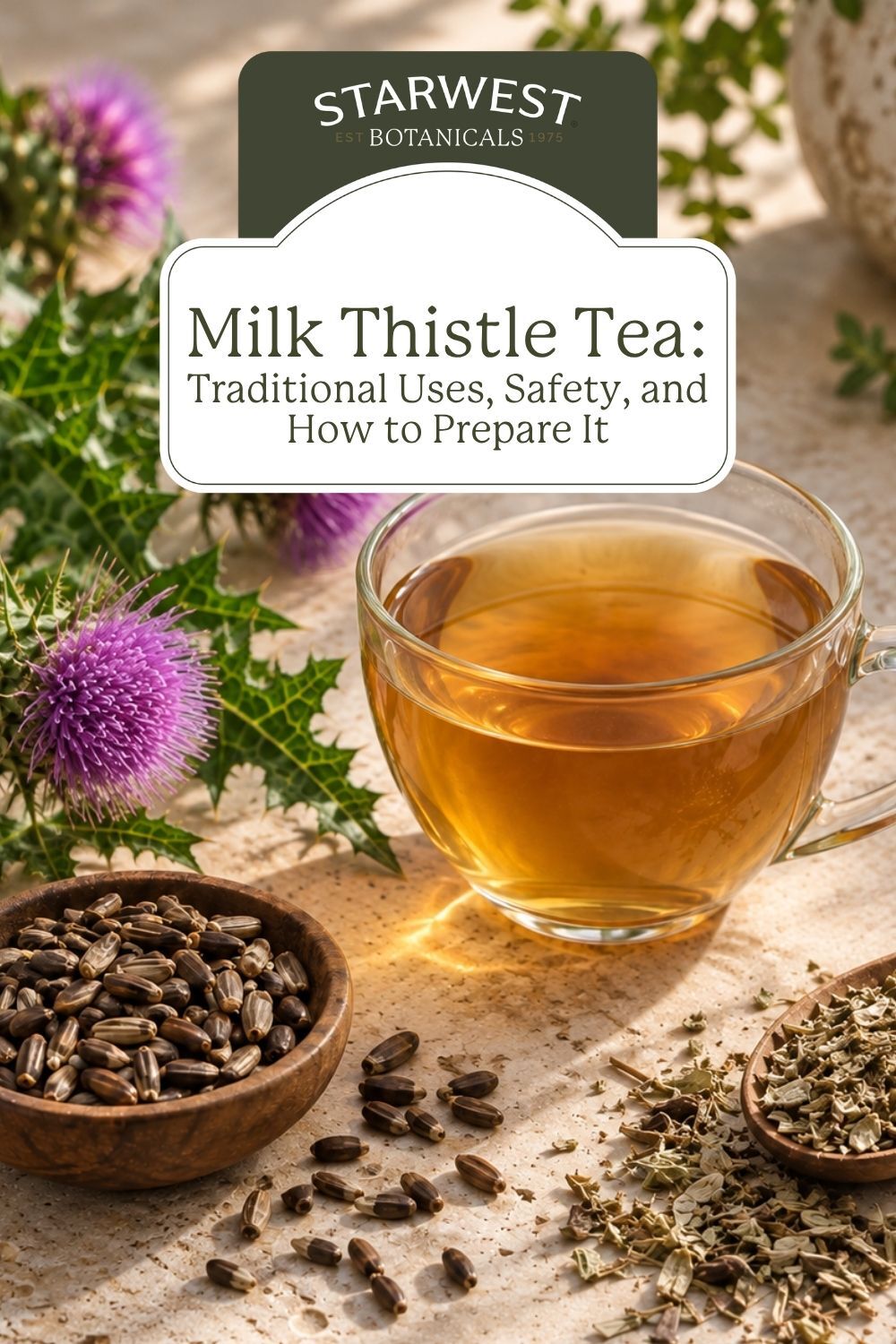
Milk Thistle Tea: Traditional Uses, Safety, and How to Prepare It
Milk thistle tea has been enjoyed for generations as part of traditional herbal practices. Made from the seeds or aerial parts of the milk thistle plant (Silybum marianum), this herbal tea is appreciated for its mild, earthy flavor and long history of use.
Today, milk thistle continues to be one of the most recognized herbs in the wellness community. While researchers continue to study its naturally occurring compounds, it's important to distinguish between traditional herbal use and what current scientific evidence can—and cannot—support.
This guide explores what milk thistle tea is, its traditional uses, what current research says, how to prepare it, and important safety considerations before adding it to your routine.
Quick Answer: What Is Milk Thistle Tea?
Milk thistle tea is an herbal infusion made from the milk thistle plant (Silybum marianum), most commonly using the seeds, though the leaves are also available for herbal preparations.
Unlike traditional teas made from Camellia sinensis, milk thistle tea is an herbal tea and is naturally caffeine-free.
Milk thistle has a long history of traditional use in European herbal practices. Today, it remains a popular botanical for those interested in incorporating traditional herbs into their wellness routines.
Evidence & Safety at a Glance
Traditional Use
Milk thistle has been traditionally used in European herbalism for centuries.
Current Research
Milk thistle and its naturally occurring compounds continue to be studied, but research is ongoing. While scientific interest remains high, findings are mixed, and more high-quality human studies are needed to better understand its potential applications.
Important Note
Milk thistle tea should not be viewed as a treatment, cure, or substitute for professional medical care. If you have questions about your health or medications, consult a qualified healthcare provider.
Traditional Uses and Current Evidence
Milk thistle has a rich history in traditional herbal practices dating back hundreds of years. Historically, various parts of the plant were incorporated into herbal preparations throughout Europe.
Today, researchers continue to study milk thistle because it naturally contains a group of plant compounds known as silymarin. Most scientific research has focused on concentrated milk thistle extracts rather than brewed herbal tea.
For this reason, it's important not to assume that findings from extract-based research apply directly to a cup of milk thistle tea.
Current evidence does not support making broad health claims about milk thistle tea, and additional research is needed to better understand its role within overall wellness.
For readers interested in learning more about herbs traditionally used in herbal preparations, our guides to Burdock Root Tea and Dandelion Tea offer additional educational resources.
Milk Thistle Seed vs. Leaf vs. Tea Bags
Milk thistle is available in several forms, each suited to different uses.
|
Product |
Best For |
|
Herbal infusions, grinding fresh as needed |
|
|
Smoothies, recipes, and herbal preparations |
|
|
Convenient everyday brewing |
|
|
Herbal tea blends and custom infusions |
Choosing the right product depends on how you enjoy incorporating herbs into your routine.
Whether you prefer the convenience of tea bags or the flexibility of whole seeds and powders, selecting high-quality organic botanicals helps ensure a great brewing experience.
How to Make Milk Thistle Tea
Preparing milk thistle tea is simple and can be customized to suit your taste.
You'll Need
- 1 Milk Thistle Organic Tea Bag or approximately 1 teaspoon of whole or crushed milk thistle seed
- 8 ounces of freshly heated water
- Mug or teapot
Instructions
- Heat water to just below boiling.
- Pour the water over the tea bag or herbs.
- Steep for approximately 5 to 10 minutes, depending on your preferred flavor.
- Remove the tea bag or strain the herbs.
- Enjoy warm or allow the tea to cool before serving over ice.
Many people enjoy milk thistle tea on its own, while others blend it with complementary herbs for a customized herbal infusion.
Things to Consider Before Enjoying Milk Thistle Tea
Milk thistle tea has a long history of traditional use and is enjoyed by many as part of their herbal tea routine. As with any botanical, it's a good idea to consider your individual circumstances before adding it to your daily routine.
Allergies
Milk thistle is part of the Asteraceae (daisy) family, which also includes plants such as ragweed, daisies, chrysanthemums, and marigolds. If you know you have allergies to plants in this family, consider speaking with a qualified healthcare provider before trying milk thistle tea.
Medications
If you take prescription medications or are managing an existing health condition, it's always a good idea to consult your healthcare provider before adding new herbs or dietary supplements to your routine.
Pregnancy and Breastfeeding
Research on the use of milk thistle during pregnancy and breastfeeding is limited. If you are pregnant, nursing, or have questions about whether milk thistle is appropriate for you, consult your healthcare provider before use.
Listen to Your Body
Everyone's experience with herbs is unique. If you choose to try milk thistle tea, start with the recommended serving directions on the product label and discontinue use if it isn't right for you.
This article is intended for educational purposes only and should not be considered medical advice.
Understanding Responsible Herbal Education
Milk thistle is one of many botanicals with a long history of traditional use and ongoing scientific interest.
It's important to distinguish between traditional herbal knowledge and established scientific evidence.
At Starwest Botanicals, we believe in sharing educational information that helps customers make informed choices while avoiding unsupported claims.
That means we do not describe milk thistle tea as a way to "detox," "cleanse," "treat," "prevent," or "cure" any disease or medical condition.
Instead, we encourage readers to explore herbs with curiosity, learn about their traditional uses, and consult qualified healthcare professionals when making personal health decisions.
Frequently Asked Questions
Is milk thistle tea naturally caffeine-free?
Yes. Milk thistle tea is an herbal infusion and does not naturally contain caffeine.
What part of the milk thistle plant is used for tea?
Milk thistle tea is commonly prepared using the seeds, though the leaves may also be used in herbal blends.
Does milk thistle tea taste bitter?
Milk thistle tea has a mild, earthy flavor with subtle herbal notes. Flavor can vary depending on the preparation and the part of the plant used.
Can I combine milk thistle with other herbs?
Many people enjoy blending milk thistle with complementary herbs. If you're exploring herbal teas, consider learning more about Burdock Root Tea and Dandelion Tea for additional inspiration.
Is research on milk thistle tea the same as research on milk thistle extracts?
No. Much of the published research has focused on concentrated extracts rather than brewed herbal tea, so findings should not be considered interchangeable.
Explore Organic Milk Thistle from Starwest Botanicals
Whether you're looking for the convenience of tea bags, the versatility of seed powder, or whole seeds for custom preparations, Starwest Botanicals offers a variety of organic milk thistle products to suit your preferences.
Explore our collection of organic herbs and teas to learn more about this traditional botanical and discover new ways to enjoy herbal infusions.
This article is intended for educational purposes only and should not be considered medical advice. Always consult a qualified healthcare professional with questions about your health or before beginning any new herbal routine.

